





Did you know your heart works harder than any other muscle in your body — every single second of your life?
In fact, the heart requires up to 10 times more energy than most other muscles to keep beating efficiently, day and night. That’s why energy production inside heart cells is critical for long-term cardiovascular health.
In this article, we’ll explore:
-
Why your heart needs so much energy
-
What happens when energy levels decline
-
And how Coenzyme Q10 (CoQ10) plays a key role in supporting heart health naturally
Why CoQ10 for Heart Health Matters So Much
Unlike skeletal muscles, your heart never rests.
It beats around 100,000 times per day, pumping blood to every organ and tissue in your body.
To do this, heart muscle cells (cardiomyocytes) are packed with mitochondria — the “power plants” of the cell — which produce energy in the form of ATP (adenosine triphosphate).
According to the British Heart Foundation, the heart has one of the highest energy demands of any organ, relying heavily on continuous cellular energy production to function properly.
Why the Heart Needs More Energy Than Any Other Muscle
As we age, or due to lifestyle factors such as stress, poor diet, and certain medications, the heart’s ability to produce energy can decrease.
Low cellular energy in the heart may contribute to:
-
Fatigue and reduced stamina
-
Reduced exercise tolerance
-
Increased oxidative stress
-
Age-related decline in heart function
One important reason for this decline is the natural reduction of CoQ10 levels in the body.
How CoQ10 for Heart Health Supports Cellular Energy
Coenzyme Q10 (CoQ10) is a vitamin-like compound found in nearly every cell, with particularly high concentrations in organs that demand a lot of energy — especially the heart.
CoQ10 plays two crucial roles:
-
Energy production – It helps mitochondria generate ATP
-
Antioxidant protection – It protects heart cells from oxidative damage
Research published via the National Institutes of Health highlights CoQ10’s importance in supporting cardiovascular function and cellular energy metabolism.
Why the Heart Needs CoQ10 More Than Other Muscles
Because the heart needs up to 10× more energy than other muscles, it also requires higher concentrations of CoQ10 to maintain optimal performance.
However:
-
CoQ10 levels naturally decline with age
-
Statin medications may reduce CoQ10 synthesis
-
Modern diets may not provide enough CoQ10
This makes targeted CoQ10 supplementation especially relevant for adults focused on heart health.
CoQ10 and Mitochondrial Energy Production in the Heart
Supplementing with CoQ10 may help:
-
Support healthy heart muscle energy production
-
Improve antioxidant defenses
-
Maintain cardiovascular performance with age
-
Support overall heart vitality
According to Harvard Health Publishing, CoQ10 supplementation has been widely studied for its role in supporting heart health, particularly in individuals with increased cardiovascular energy demands.
Declining CoQ10 Levels and Heart Health With Age
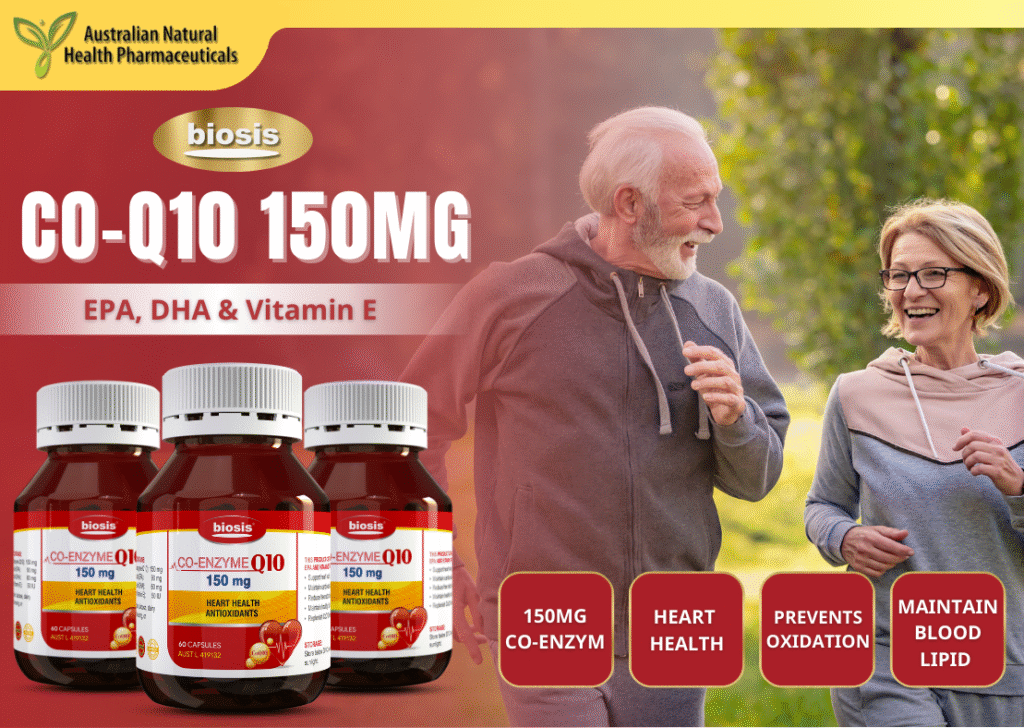
If you’re looking for a convenient way to support your heart’s energy needs, Biosis Co-Enzyme Q10 150mg is formulated to help fuel a hardworking heart.
This supplement is designed to:
-
Support cellular energy production
-
Help maintain heart muscle function
-
Provide antioxidant support for cardiovascular health
It’s especially suitable for adults seeking daily heart support, active individuals, or those mindful of age-related heart energy decline.
Simple Lifestyle Tips to Support Heart Energy
Alongside proper nutrition and supplementation, these habits can support heart health:
-
Regular physical activity (moderate intensity)
-
A balanced diet rich in healthy fats
-
Managing stress levels
-
Getting adequate sleep
Combining healthy habits with nutrients like CoQ10 helps support the heart’s ongoing energy demands.
Your heart is the most hardworking muscle in your body — and it needs fuel to keep going strong.
Understanding that your heart requires significantly more energy than any other muscle highlights the importance of supporting cellular energy production. With the help of nutrients like CoQ10, you can give your heart the support it needs to perform efficiently, day after day.
A well-fueled heart is a healthier heart.

Present posts in a best way to highlight interesting moments of your blog.
Lastest Articles Liver Health
7 Science-Based Benefits of Milk Thistle
Milk thistle may be useful in treating liver disease, cancer, and diabetes. But the evidence is limited, and some research methodologies...
Heart & Circulation Health Lastest Articles
CoQ10 and Statins: What You Need to Know
CoQ10 may help reduce cholesterol and improve cardiovascular health, but more research is needed to confirm this. Ask your doctor if...
Brain Health Eye health Heart & Circulation Health Lastest Articles
5 Signs and Symptoms of Omega-3 Deficiency
It’s important to consume omega-3 fatty acids. They’re an important component of your cell membranes. Your body also needs them to...
Brain Health Eye health Heart & Circulation Health Lastest Articles Wellbeing News
17 Science-Based Benefits of Omega-3 Fatty Acids
Omega-3 fatty acids have been linked to many health benefits. In particular, they may help promote brain and heart health, reduce...
Eye health Lastest Articles Wellbeing News
9 Emerging Health Benefits of Bilberries
Bilberries are linked to various health benefits, from improved vision to lower blood sugar and cholesterol levels. Bilberries (Vaccinium myrtillus) are...
Bone & Joint Health Lastest Articles Wellbeing News
Glucosamine Chondroitin: Uses, Benefits, Side Effects, and Dosage
Glucosamine and chondroitin are two popular supplements said to help manage joint pain. Despite their widespread use, though, research on glucosamine...